UV400 on the temple arm, in plain words
Every pair we ship says UV400 somewhere on it, and most people politely ignore it the way they ignore the wash label in a shirt. Fair. But it is the one spec on the frame that is about physics rather than fashion, so it deserves two minutes.
The number is a wavelength
Light is measured in nanometres. The visible range runs from roughly 400 to 700; below 400 sits ultraviolet, which you cannot see but your eyes still receive. UV400 means the lens blocks everything up to 400 nanometres, which takes in both the UVA and UVB bands. That is the whole claim. No percentages to parse, no asterisk.
Darkness is not protection
This is the part worth remembering. The tint you can see and the UV filter you cannot are two separate layers doing two separate jobs. A cheap lens can be very dark and filter no UV at all, and that combination is worse than bare eyes: behind a dark lens your pupils open wider and admit more of everything, including the band the lens never filtered. A clear lens, meanwhile, can be full UV400. Our night driving glasses are exactly that: barely tinted, fully filtered.
Why we hold the kids pairs to the same line
Kids spend more hours outdoors than the adults buying for them, and a young lens transmits more of the short wavelengths. So the youth frames in our range are not a softer spec in a smaller box. Same UV400 lens, cut down to a six to fourteen year old face.
What to check when buying anywhere
Look for the UV400 marking or the words "100% UVA/UVB" on the listing, not on the price tag. Treat any pair that only advertises its darkness with suspicion. And if a pair of ours ever reaches you without the marking on the arm, write to us, because that is a production miss we want to hear about.
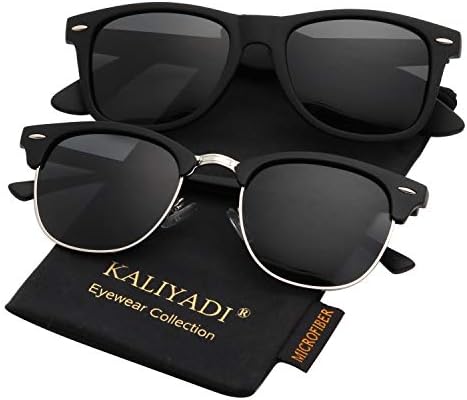
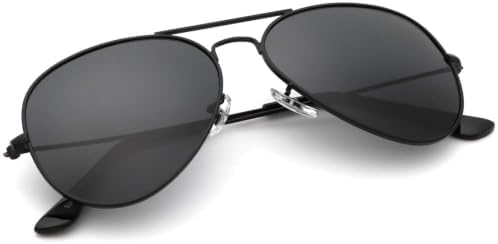
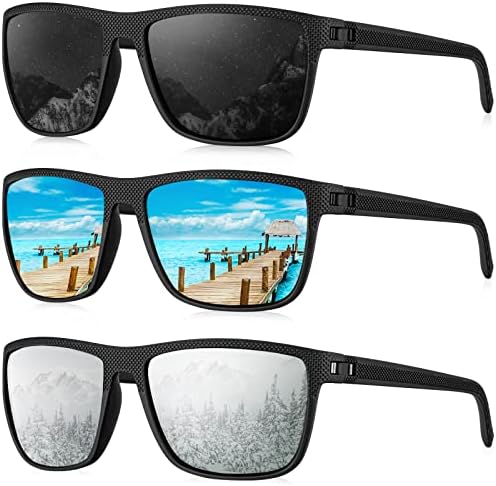
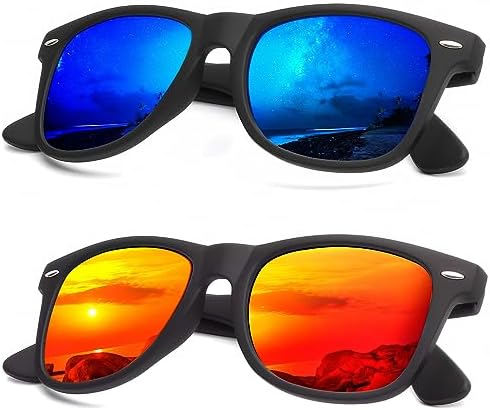
Below are the four most rated pairs in the range right now. All UV400, like the other 44 we did not have room for.