Polarized or plain tint: which lens earns its keep
People use the words interchangeably, and we understand why. Both lenses are dark. Both go on your face. The difference only shows up when the light does something specific, so let us describe that specifically.
What a tint does
A plain tint dims everything evenly. Bright day, dark lens, comfortable eyes. That is the whole trick, and on an overcast walk or a patio lunch it is all the trick you need. The tint has no opinion about where the light came from.
What the polarized film adds
Light that bounces off a flat surface comes back organised, vibrating mostly in one plane. The road ahead of your hood does this. So does water, snow crust and the roof of the car in front. A polarized film is a set of microscopic slats aligned to block that plane. The organised bounce gets filtered, the ordinary scattered light passes, and the flat white sheen on the road simply switches off while the rest of the scene keeps its brightness.
The practical difference is largest when the sun is low and in front of you, on wet roads, and on water. Fishing is the extreme case: with the mirror layer gone you can read structure under the surface that a plain tint will never show you.
Where plain tint still wins
Screens. LCD instrument clusters, some phone screens and pump displays are themselves polarized, and two polarizers at the wrong angle go dark. Most people just tilt their head an inch and live with it, but if your day is mostly screens, a plain tint is the calmer choice. That is also why our night driving glasses carry no polarizing film at all: at night there is no glare sheet to cut, only scarce light you want to keep.
How to tell what you are holding
Hold the lens in front of an LCD screen and rotate it. If the screen blacks out at an angle, the lens is polarized. On our own range the product page says it outright: 45 of our 48 styles carry the film, and the ones that do not are named as such.
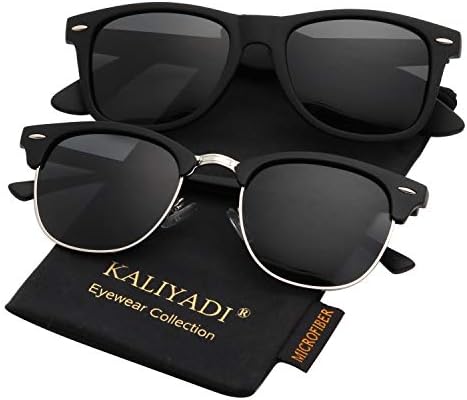
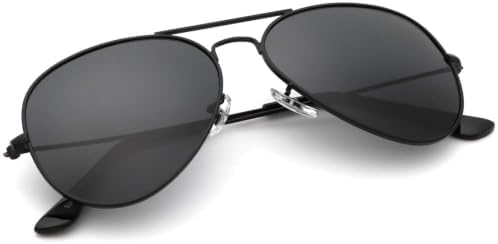
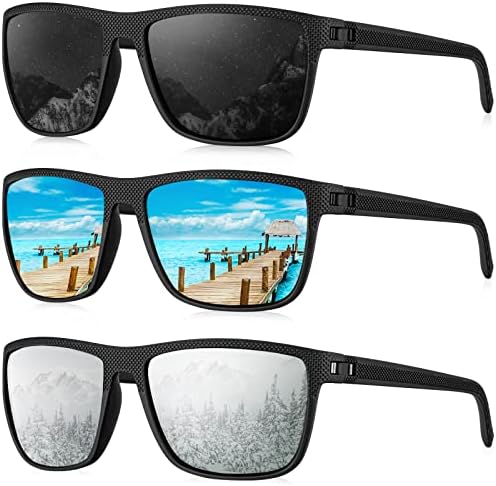
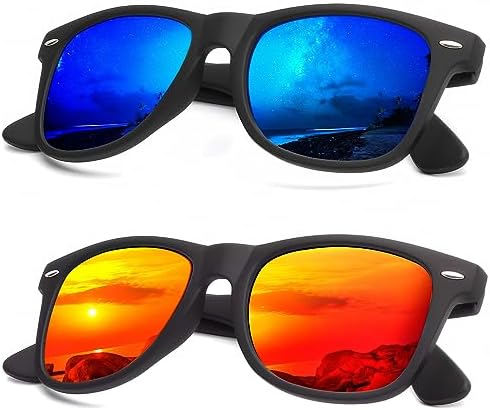
Our position, since we are the ones making them: the film costs us little and does the most work of any part of the lens, so we put it nearly everywhere. The pairs below are the polarized styles our buyers rate highest.